
MoYu WeiLong V11 AI Review: Faster, Lighter, Better Than the V10 AI?
TL;DR & Overview
MoYu WeiLong V11 AI
Score
Pros
Cons
Specifications
Introduction
The WeiLong V10 AI was MoYu's answer to GAN's smart cube lineup: gyro, rechargeable, and cheaper than the flagships. It was also a bit heavy, a bit blocky, and in our experience not entirely reliable on the electronics side. The V11 AI sets out to fix all of that on top of the new WeiLong V11 hardware. We solved on it for several weeks, including fast TPS bursts, tension experiments and a lot of one-handed solving. Here is what we found.
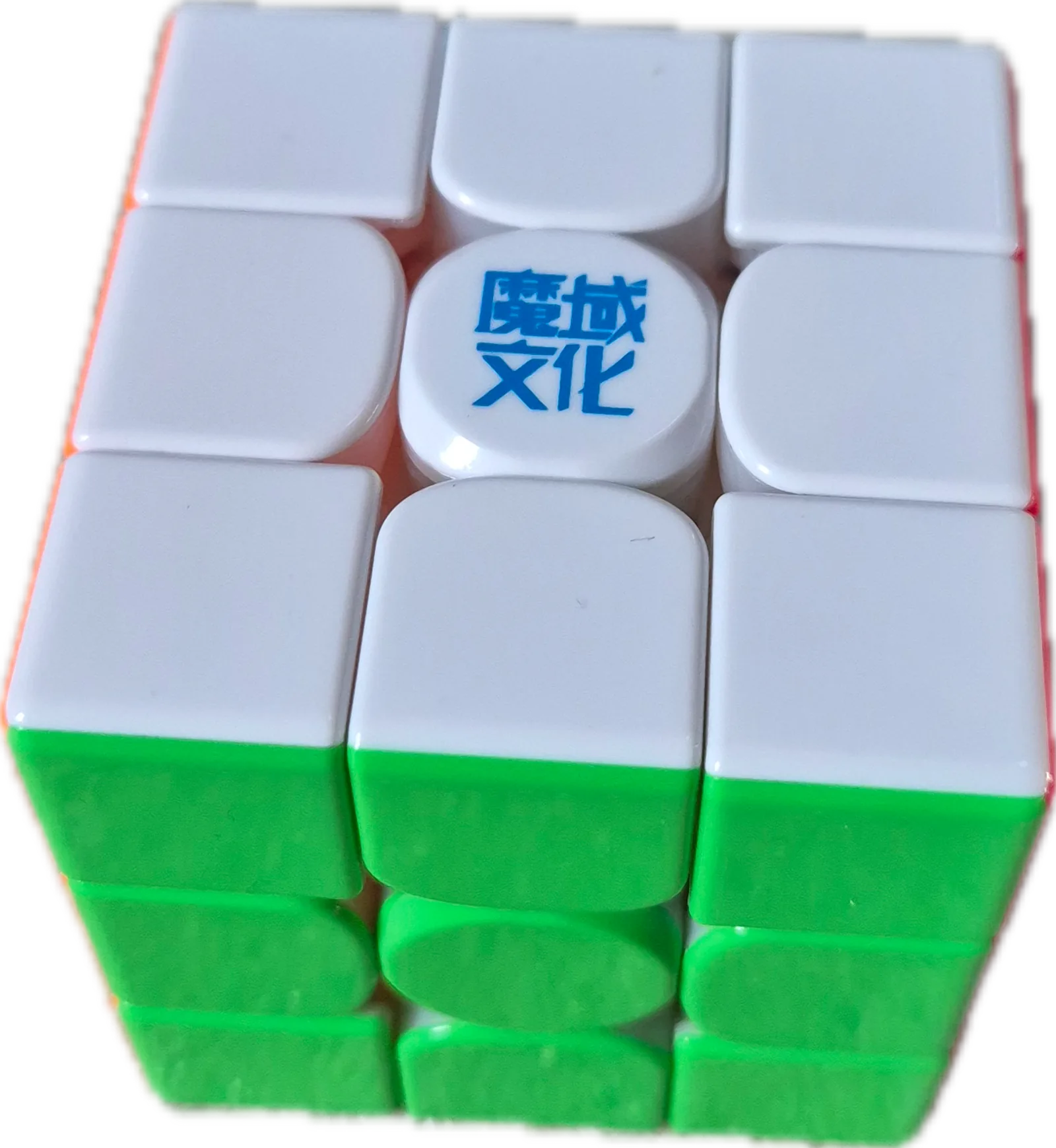
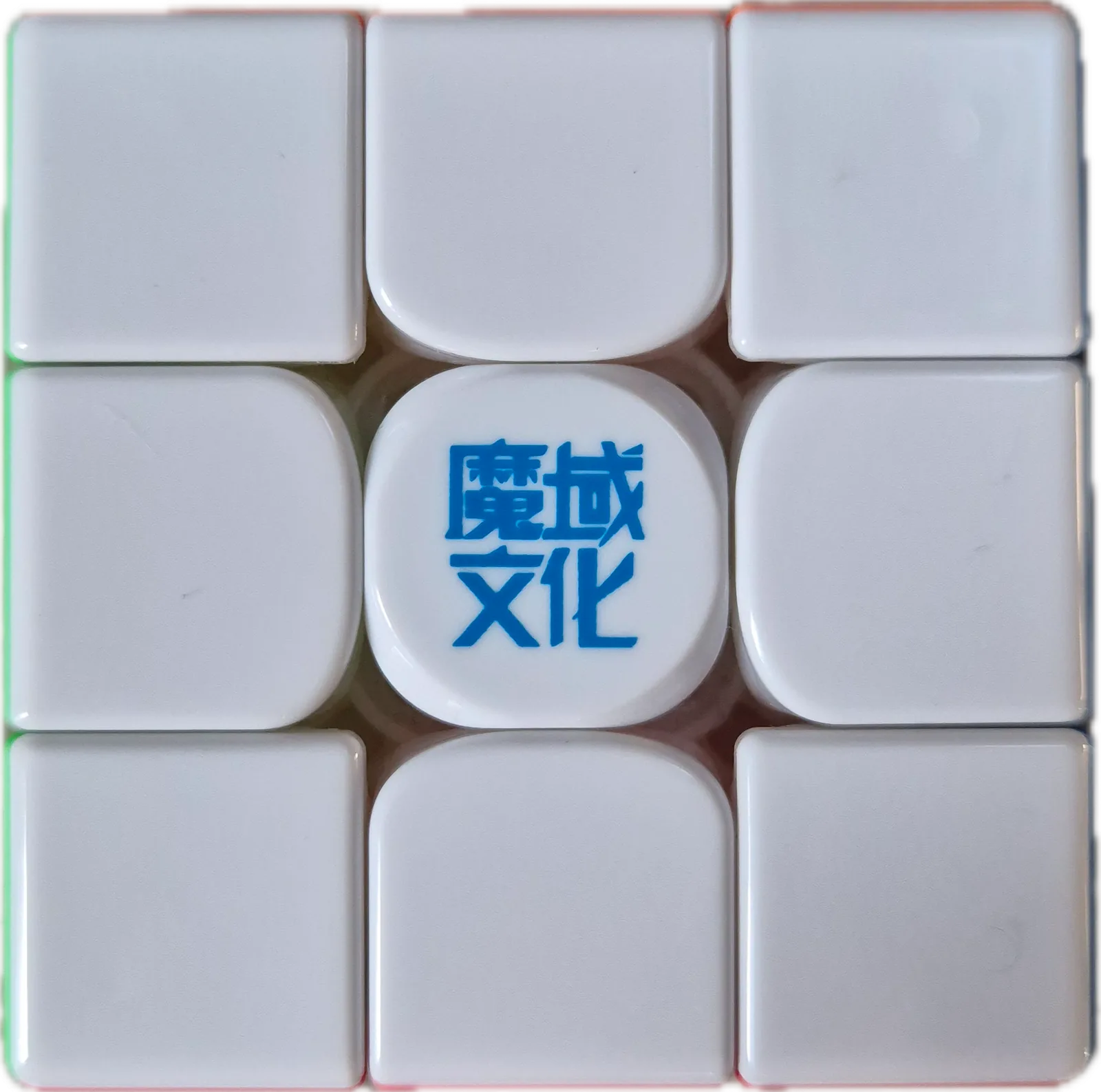
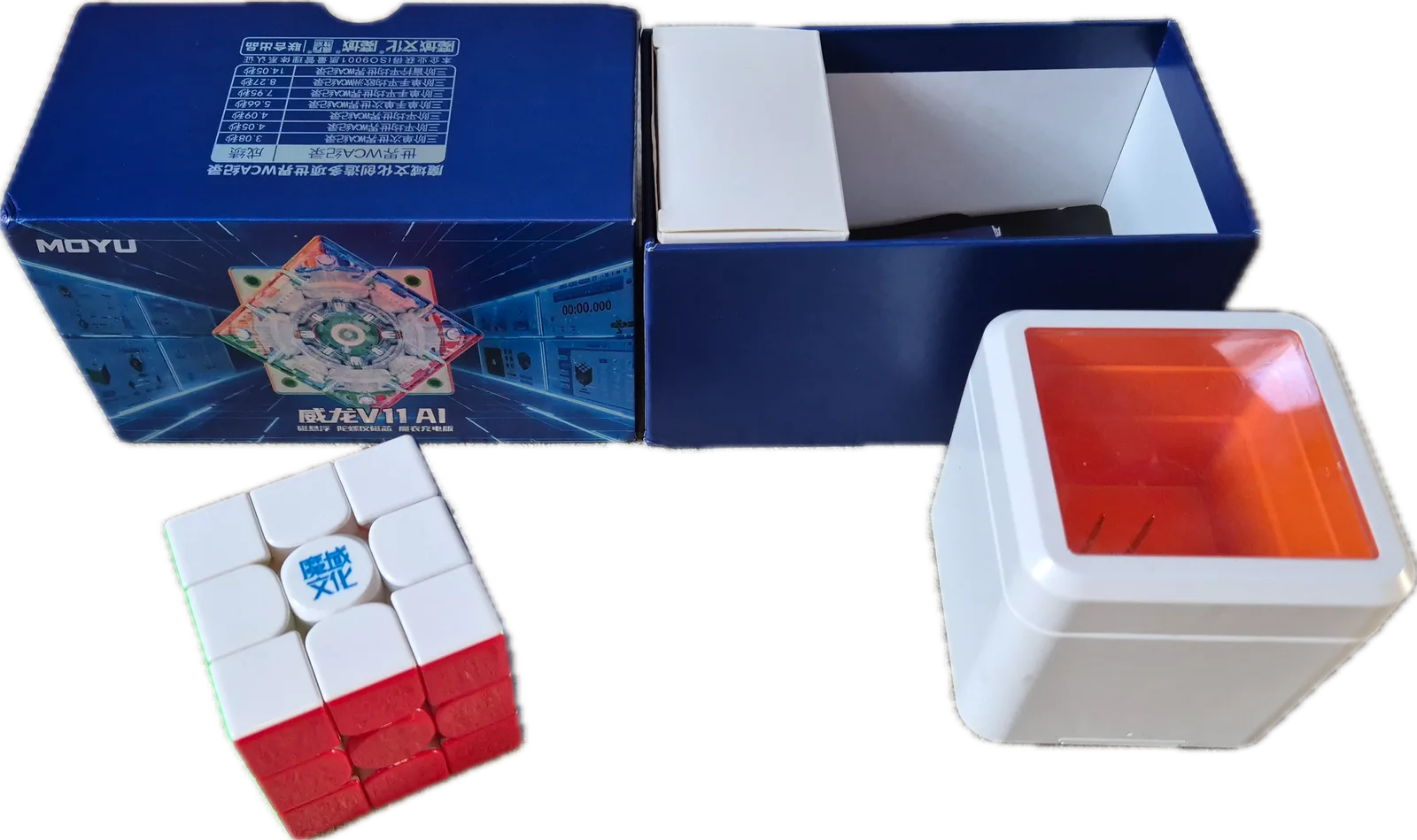
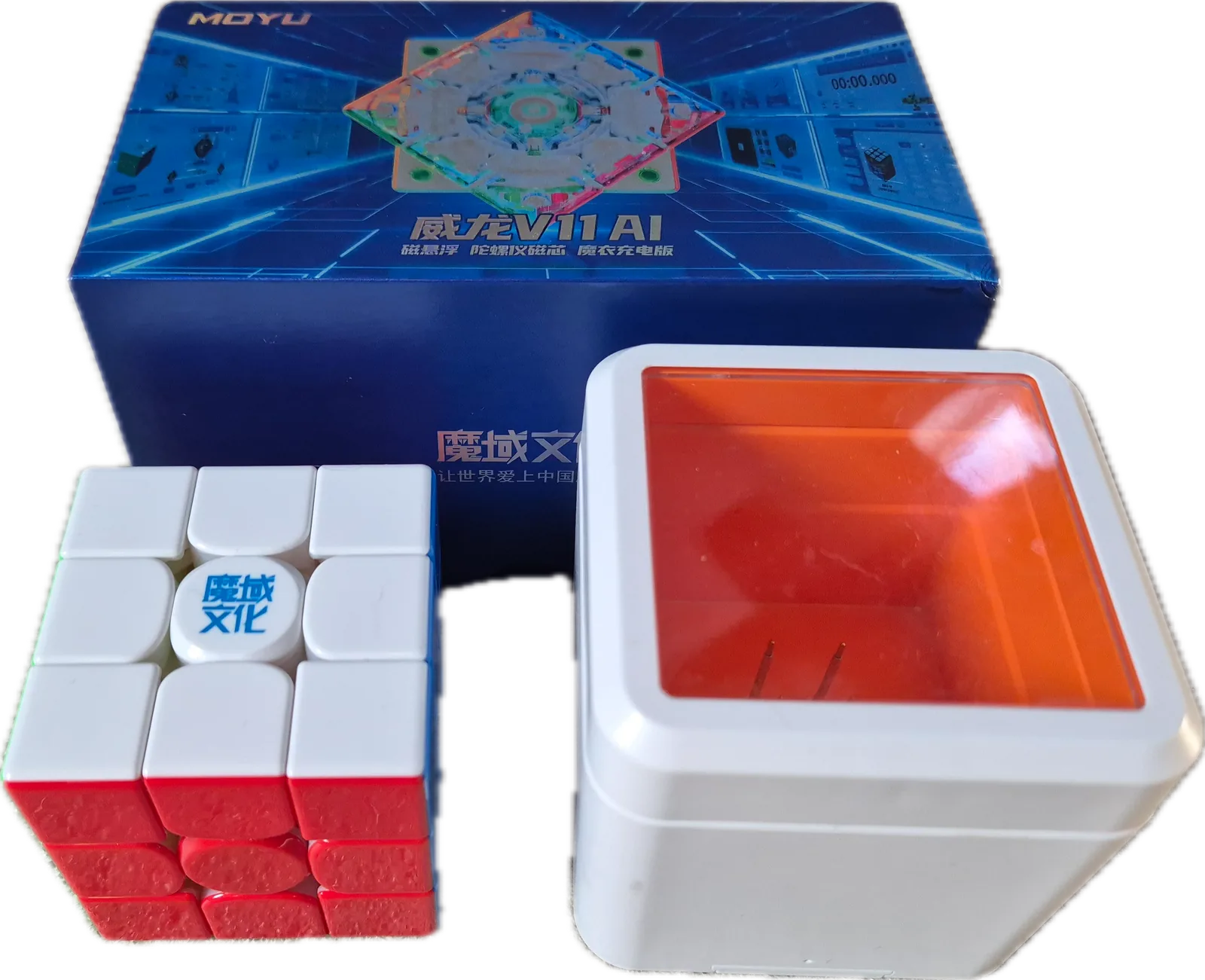
Our test unit is the 18th Anniversary Edition: the same MagLev cube with an 8-magnet ball core and UV coated surface as the standard V11 AI pictured here, just with transparent internal plastic, a red anniversary box and carry case and a collector's card. Everything below applies to both.
Build Quality and First Impressions
In the box: the cube, MoYu's smart cube charging box with its phone stand, an adjustment tool and, on the Anniversary Edition, the red box, carry case and card. What is not in the box is a charging cable or power adapter. You will need to supply a USB-A to USB-C cable yourself, and more on why it has to be exactly that in a moment.
The big first impression is the weight. At around 72 g the V11 AI is clearly lighter than the V10 AI and no heavier than a current-generation non-smart flagship; in hand it feels closest to a DaYan GuHong Pro M. The glossy UV coated surface has good grip and holds up well over long sessions. Nothing about the cube in hand says "electronics inside", which is exactly the point.
Charging and Battery
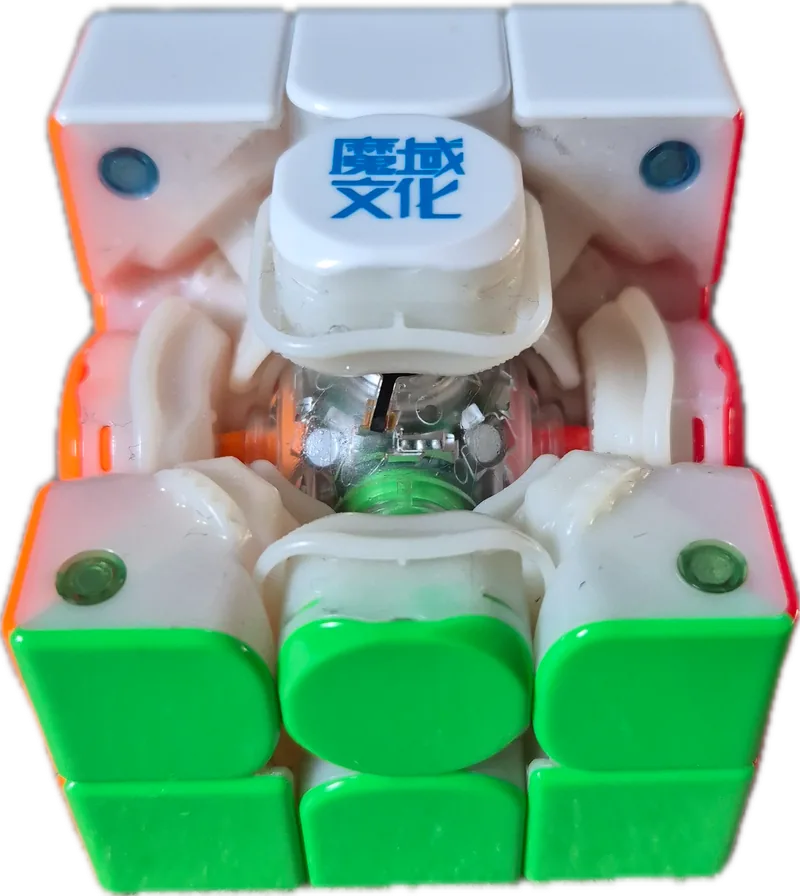
Charging is the weakest part of the V11 AI package. The cube charges in MoYu's charging box, which connects over USB-C, but in our testing it only charged with a USB-A to USB-C cable. USB-C to USB-C cables and modern USB-C power adapters did nothing. Combined with the fact that no cable ships in the box, expect a bit of trial and error on day one. A full charge takes a few hours.
MoYu quotes up to 30 hours of solving per charge. Our estimate from several weeks of use is closer to 10 hours. That is enough for a week of normal training between charges, but it is well short of the claim and well short of what GAN's pod-charged cubes manage. The upside: after several weeks we have seen none of the electronics failures we ran into with the V10 AI.
Turning Feel and Magnets
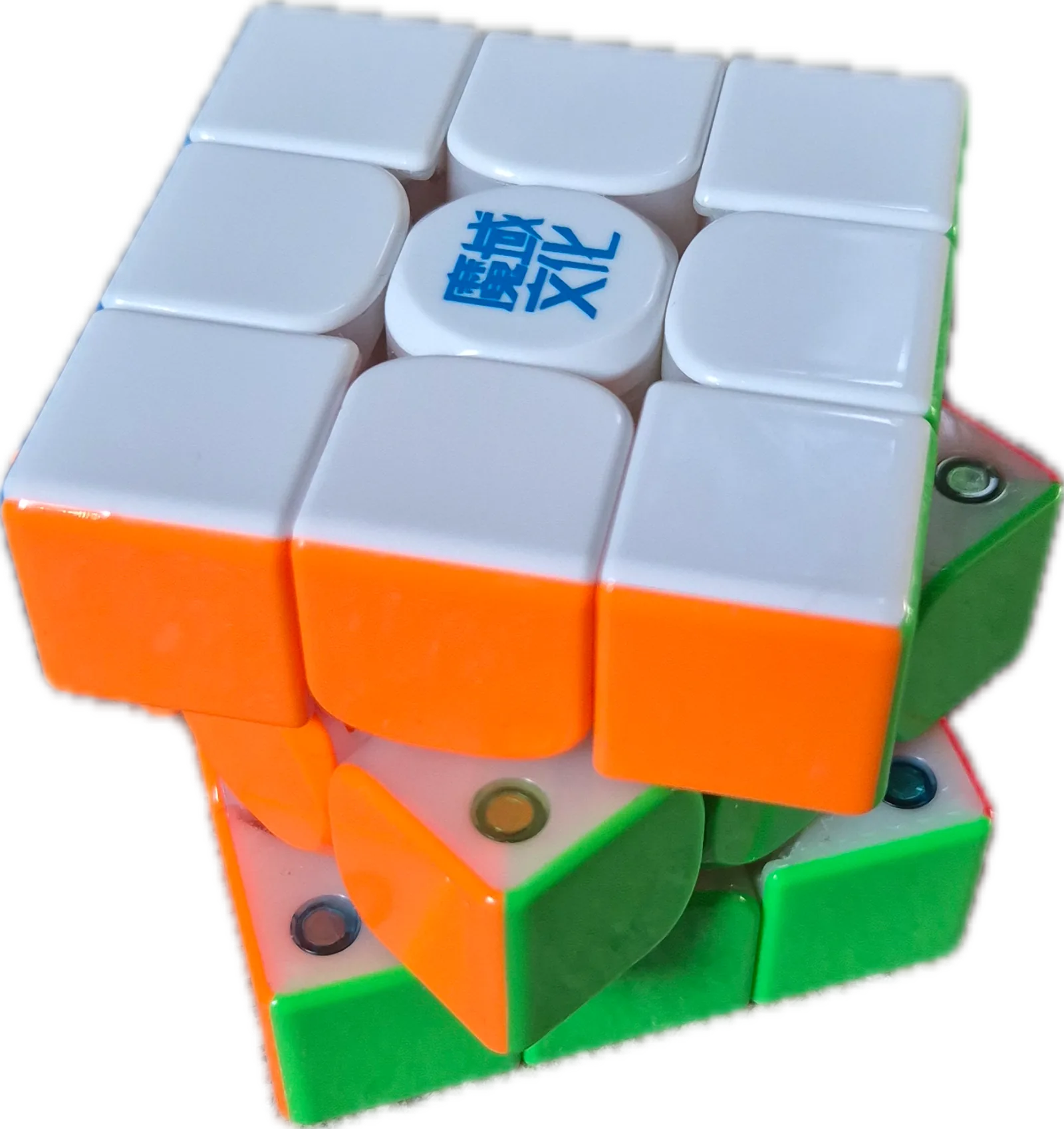
The best word for the V11 AI is airy. It is smooth with only subtle plastic contact, bright and clicky out of the box, and very fast. Compared to the V10 AI it is faster, lighter and noticeably less blocky, and that is a significant improvement rather than a refresh. It is good out of the box, but depending on your turning style it may need a notch of tightening or a drop of lube before it feels controllable. With lube it turns very smooth and quiet while staying fast and loose.
The magnets are medium in strength and the snap on layer alignment is only just noticeable. Because the cube is so fast, aligning a face takes very little force, and the magnets do their work in the last few millimeters of a turn, snapping the layer home precisely. It is a subtle tuning, not a tactile one.
This is a cube for fast, smooth turners, and it works well one-handed. If you want a controlled, crunchy feel where every layer locks into place with authority, the V11 AI will feel too loose for you at default settings, and that is the single most important thing to know before buying.
On sound: medium volume out of the box with a clicky character, and quiet once lubed. No rattle, no harsh noises.
Tensioning and Adjustability
The V11 AI offers eight tension settings and eight MagLev elasticity settings, 64 configurations in total, adjusted with a single tool. The factory default sits on the looser side, which fits the fast character of the cube but is also where most of the controllability complaints come from. A step or two tighter is where we ended up.
One caveat, though: there are no interchangeable magnets. Magnet strength is fixed, so tension and elasticity are the only levers you have. For a cube at this price that is a thinner settings menu than the competition offers, and it is the one thing tinkerers will miss.
Corner Cutting and Stability
Corner cutting is excellent. Forward corner cutting reaches a full 45°, and reverse cutting is very good, though how far it goes depends on how tight you run the cube. Either way it is more than any solver will ask of it.
Lockups are the one place where the factory setup shows its weakness. Out of the box the V11 AI is extremely fast and loose, and under aggressive turning that translates into overshooting layers and light lockups when a turn is not precise, along with a generally wobbly feeling. The fix is simple: tighten the tension a notch or two and the wobble drops dramatically, and with a drop of lube on top the cube becomes very good. Just do not judge it at the default settings.
Stability follows the same pattern. Pops: none, at any tension we tried. Corner twists: possible if you run the cube loose and turn roughly, and they go away once tightened. Structurally the cube stays composed even under fast, inaccurate turning, and MoYu's anti-pop and anti-twist corner design clearly does its job.
Smart Features and Tracking
Bluetooth pairing is quick and the connection stayed stable across weeks of sessions. On the metric that matters most, the V11 AI is flawless: across the whole test period, including deliberate fast bursts above 8 TPS, it did not drop a single move. We saw no direction confusion, no U logged as U', and no over-detection on small or incomplete turns either, and this was the case both in acubemy and in MoYu's native app.
The gyroscope provides full 360° orientation tracking, so solve reconstructions include rotations and not just move lists. In our hands it delivered what we need for orientation-aware reconstruction and rotation statistics without drama.
Upgrading from a V10 AI?
If you own a V10 AI, the short answer is yes. The V11 AI is faster, lighter and less blocky, and it addresses the two things that bothered us most about its predecessor:
- Weight and feel: clearly lighter, airier and closer to a modern non-smart flagship than the V10 AI ever was
- Reliability: no electronics failures or flaky contacts so far, where the V10 AI gave us trouble
- Tuning: 64 configurations of tension and elasticity instead of a single tension screw
What has not changed is the charging situation, which remains fussy, and the fixed magnet strength. If neither of those bothered you on the V10, nothing here will either.
Who Should Buy the MoYu WeiLong V11 AI?
Advanced speedcubers looking for a main-cube-quality smart cube who like MoYu cubes and like them fast and loose. For that audience the V11 AI is an easy recommendation: it is a genuine main with a data stack that does not miss a move.
Against GAN's lineup, the picture is more nuanced than it was with the V10. The GAN i4 is now clearly cheaper, more planted and far easier to charge, and if you prefer control over speed it is the better buy. Against GAN's flagships like the GAN16 ui the V11 AI holds its own on feel and undercuts them on price, but it cannot match their charging convenience or their tuning depth. This comes down to brand feel more than anything: if you prefer MoYu turning to GAN turning, the choice makes itself.
For beginners and cubers who want a controlled, tactile cube, this is the wrong entry point. The fast, loose default is not forgiving, and there are cheaper ways to get flawless move tracking, such as the GAN iCarry 4.
Bottom Line
The MoYu WeiLong V11 AI is the smart cube MoYu fans have been waiting for: speed, low weight and precision, with tracking that never missed a beat and none of the reliability worries of the V10 AI. The trade-offs are real but predictable: a default setting that almost demands tightening to keep the cube controllable, no magnet options, and a charging box that is picky about cables and does not ship with one. At around $115 for the standard cube and $120 for the 18th Anniversary Edition it is not cheap, but as a main for a fast MoYu turner it earns its keep.
Transparency note: we bought both the standard MoYu WeiLong V11 AI and the 18th Anniversary Edition ourselves. MoYu was not involved in this review and had no editorial control over the result; the testing, measurements, scores and conclusions above are entirely our own. Want to see what your solves look like with gyro data? Try acubemy with any supported smart cube.